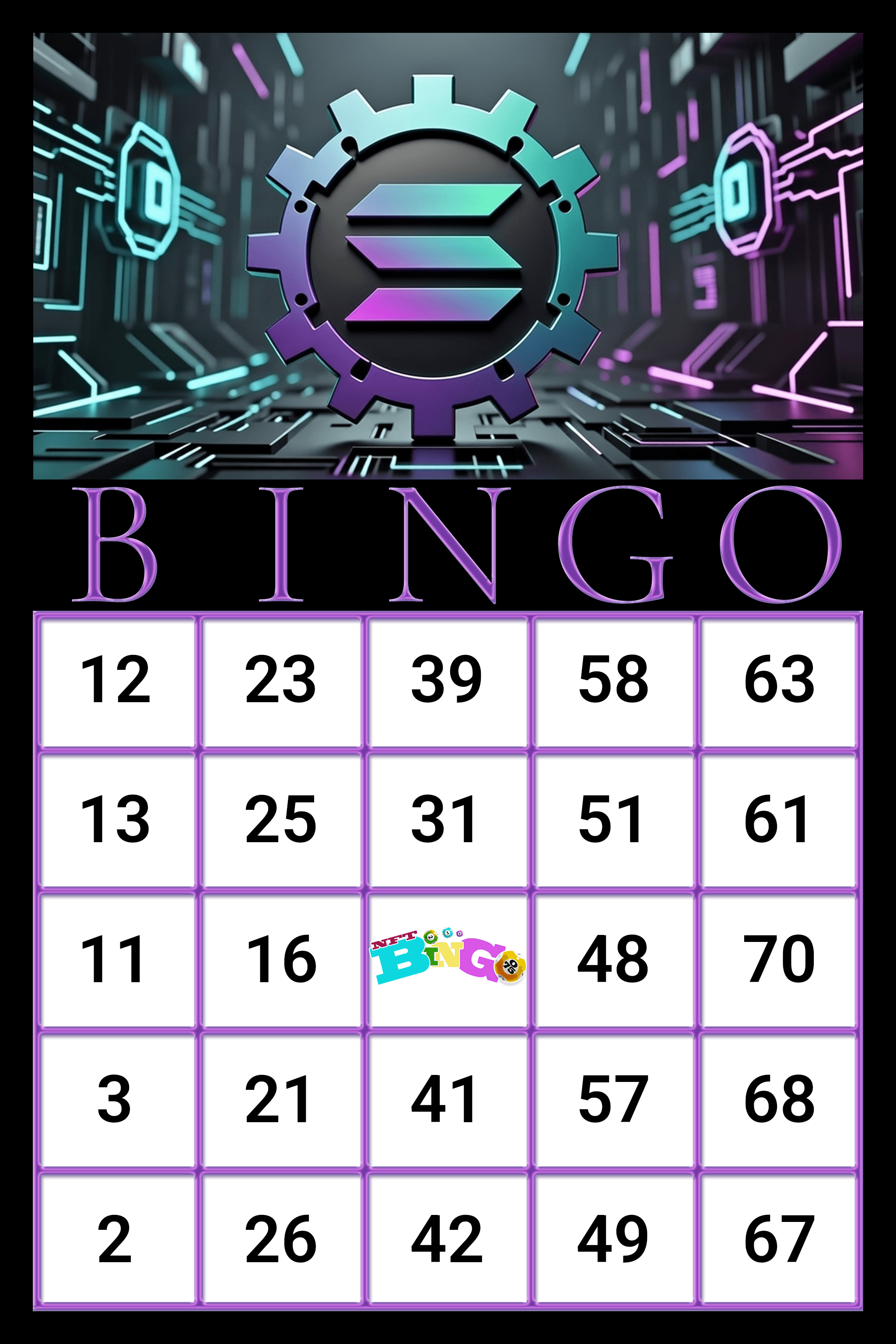
The game of BINGO
Bingo is a simple and well-known number game that has been played for many years in bingo halls, community centers, and homes around the world.
Each player uses a bingo card that contains a grid of numbers. As numbers are called out one at a time, players check their cards to see if those numbers appear. When a player completes a required pattern on their card, they win the game.
NFTBingo takes this familiar game and brings it into a digital, online environment while keeping the rules and experience of bingo the same.
The biggest difference is that instead of paper bingo cards, players use digital NFTBingo cards that are owned as NFTs.
How a Bingo card works
A standard bingo card uses a 5 × 5 grid, meaning there are five columns and five rows, for a total of 25 spaces.
Across the top of the card are the letters:
B – I – N – G – O
Each column uses a specific range of numbers:
- B column: numbers 1–15
- I column: numbers 16–30
- N column: numbers 31–45
- G column: numbers 46–60
- O column: numbers 61–75
The center space of the card is a free space, which is always counted as already filled.
Every bingo card is unique because the numbers in the grid are arranged differently. This uniqueness is what makes each card a separate chance to win.
How Bingo is played
During a game, numbers are randomly drawn one at a time. Each number belongs to one of the B, I, N, G, or O columns.
When a number is called, players check to see if that number appears on their card. If it does, they mark, or daub, it.
As numbers are drawn, players watch for their daubed numbers to create a winning pattern, such as:
- A full horizontal row
- A full vertical column
- A diagonal line
- Other winning patterns defined before the game starts
When the numbers on a card complete the winning pattern, the player calls “BINGO!” and the game is resolved based on the number that completed the pattern.
If multiple players complete the pattern on the same number, the prize pot is shared.
What makes NFTBingo different
NFTBingo uses the same bingo rules, card layout, and winning patterns as traditional bingo.
What changes is how the bingo cards are created, owned, and checked.
In NFTBingo, each bingo card is an NFT. This NFT contains embedded metadata that permanently defines the card and the numbers it has to play with.
The metadata includes:
- The full 5 × 5 grid of numbers
- Information that allows the platform to verify wins automatically
- The Series or Collection information that determines the payout percentages for the win
Because the card’s numbers are stored directly in the metadata, the system always knows exactly which numbers belong on each card.
This allows NFTBingo to automatically apply drawn numbers to every card and accurately detect when a winning pattern is completed.
How games work on NFTBingo
When a player enters a game, they choose one or more of their NFTBingo cards.
That card is temporarily locked to the game while it is active.
As numbers are drawn, the platform automatically checks each card’s metadata to see which numbers match.
Players may choose to, but are not required to manually mark their cards.
The system tracks progress for every card in the game. Players still remain responsible for recognizing when their card completes a winning pattern and calling “BINGO,” just like in traditional bingo.
Once the game ends, the card is released back to the owner and can be used again in future games.
Fairness and reuse
All NFTBingo cards follow the same rules and have the same chances of winning.
The artwork or appearance of a card does not affect gameplay.
Cards are not consumed or destroyed when they are used. A single card can be reused many times across different games.
By embedding the card’s numbers directly into NFT metadata, NFTBingo ensures that gameplay is transparent, verifiable, and fair, while still feeling familiar to anyone who has played bingo before.
In simple terms
NFTBingo is still bingo.
- The cards use a 5 × 5 grid of numbers
- Numbers are randomly called one at a time
- Players complete patterns to win
The difference is that the cards are digital, owned by players, and powered by web3 metadata instead of paper.
This allows bingo to be played online with automatic checking, reusable cards, and transparent results—without changing how the game itself works.